

af Magazine
~The Asahi Glass Foundation’s web magazine on the global environment~


An Interview with Professor Daniel Sperling: The Future of Sustainable Transportation
Professor Daniel Sperling, a pioneer in the field of sustainable transportation and recipient of the Blue Planet Prize in 2013, has witnessed major transformations over the past decade. Discussions on vehicle electrification, alternative fuels, and the relationship between cities and mobility have moved into the global spotlight. Today, governments and companies alike are actively committing to decarbonizing the transport sector. How does Professor Sperling view this rapidly changing landscape--and where does he see the key challenges and opportunities ahead? We spoke with him to find out.
Technological Progress Beyond Expectations and Backlash: What Should Be Japan's Way Forward?

"There have been huge technological innovations and advances in the last 10 to 15 years -- much more than I expected."
Thirteen years have passed since Professor Sperling received the Blue Planet Prize in 2013. When we asked him about recent changes in the transportation sector, this was his reply. He points to breakthroughs such as vehicle automation, internet connectivity, app-based mobility services, electric vehicles (EVs), advances in batteries, and the growing use of AI. Technologies aimed at reducing the environmental impact of cars and transportation, he says, have been evolving rapidly, intertwined with advances in information technology.
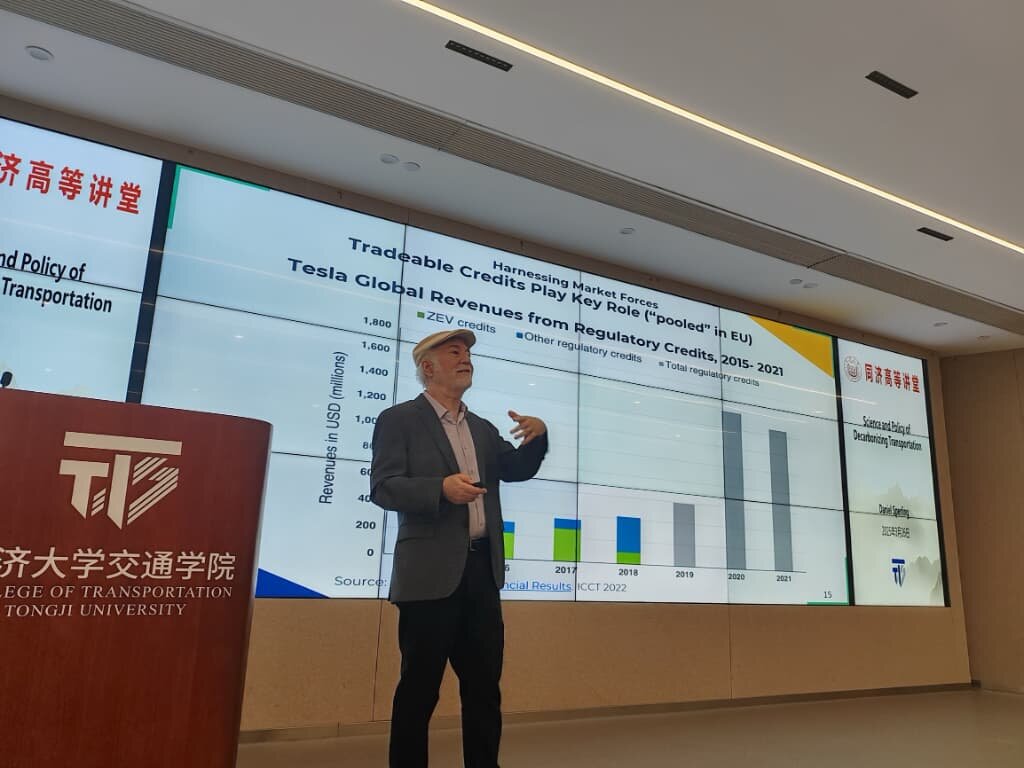
"The changes that have happened very successfully are batteries and electrification," Sperling explains. "Globally, around 25% of all vehicles sold are now electric vehicles. While Tesla took the early lead, Chinese manufacturers followed with large-scale production, successfully driving down production costs. I believe the foundation for the widespread adoption of EVs is now in place."
At the same time, Sperling's tone turns somber as he notes some negative changes.
"The first", he explains, "is the political backlash against aggressive electrification in the United States and to a lesser extent in Europe." He continues, "Another negative change is growing skepticism of experts and university researchers. In many places, such attitudes have spread on social media and among political leaders, becoming part of populist political movements."
Although there has been some backlash, EVs continue to gain market share globally. In contrast, Japan's EV market share remains at around 3%, even including plug-in hybrids. On this point, Sperling argues, "Unfortunately, I think the main reason is rooted in corporate strategy."
He explains that the Japanese government has been strongly influenced by domestic automakers that were more interested in gasoline hybrids and in hydrogen than in battery electric vehicles. "Electric vehicles are going to dominate the industry and the world. The question is how soon it becomes the norm," he says, emphasizing that Japan must catch up as quickly as possible. "To do so, it's important to expand more charging infrastructure. That will require strong, high-level leadership--not only from the national government but also from local and regional authorities."
The Blue Planet Prize as a Catalyst: Opening the Door to International Collaboration
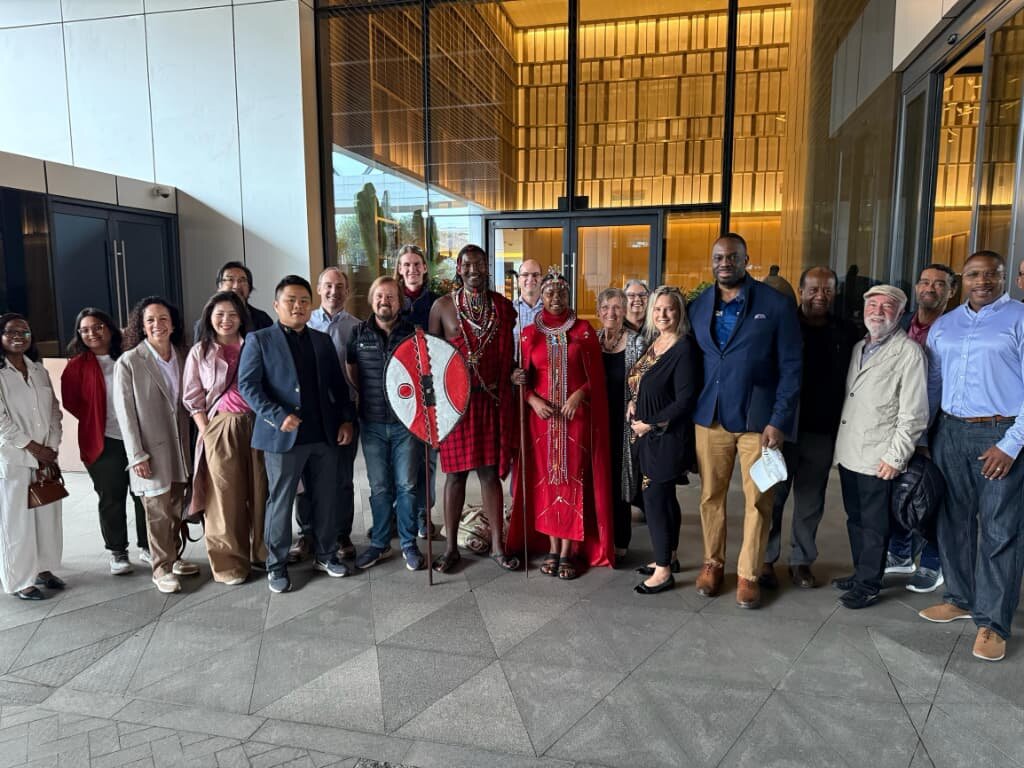
Sperling founded the Institute of Transportation Studies at the University of California, Davis in the early 1990s, focusing on sustainable transportation when that was not yet established as a formal research field. Since then, he has worked closely with policymakers in California, not only analyzing policies, but also designing policies.
"Among my major accomplishments," Sperling says, "are helping to design the Low-Carbon Fuel Standard (LCFS) for California. In addition, as a board member of the California Air Resources Board and as director of the expanding Institute of Transportation Studies, he played an instrumental role in the design and analysis of policies for zero-emission vehicles (ZEVs), biofuels, and advanced mobility services." Policies pioneered in California, including the LCFS, have since become models for other regions and continue to have significant influence around the world.
In recent years, Sperling has established a global network of researchers working on transportation and environmental issues, helping to shape policy in various regions. Looking back, he describes receiving the Blue Planet Prize in 2013 as a major turning point.
"I deposited the prize money--about $500,000--into the Institute of Transportation Studies account and then successfully solicited another $1.5 million from individuals and companies," he recalls. "With that funding and additional funding from UC Davis and many foundations and governments, we launched new international centers focused on sustainable transportation in Europe, India, and for the Global South. These centers play a very important role today." He explains that by creating a global community of researchers specializing in sustainable transportation, research findings, policy lessons, and expertise are now being shared and implemented across countries and regions worldwide.
Beyond Short-Termism: A Clear-Eyed Assessment of Risks and Benefits
Over the past decade, we have seen significant strides in sustainable transportation through technological innovation, yet political backlash has intensified. From a broader perspective, how should the world confront the climate crisis? We asked Sperling what is most needed to address this global challenge and to implement sustainable transportation successfully.
"There are three important points," he explains. "The first is to accurately assess the 'cost' of the climate crisis. We need a clear understanding of the costs of the damages caused by climate change, as well as the costs of taking action and the benefits those actions bring."
Sperling points out that both governments and citizens tend to be preoccupied with immediate budget constraints and short-term economic considerations. As a result, history shows that essential long-term climate policies have frequently been derailed or set back by shifts in public opinion and political pressures.
"History is full of examples of how shortsighted thinking slowed progress. Looking to the future, people in all sectors need to shift their mindset."
"The second point is the acceleration of innovation," Sperling continues. He emphasizes that continued progress in carbon capture, utilization and storage (CCUS), improvements in renewable energy efficiency, and other breakthroughs that underpin a zero-emission society are indispensable. In his view, the pace of the transition will be determined not only by deploying existing technologies but also by continuing to invest in next-generation solutions.
The third point is stronger international cooperation.
Climate change is a global problem that crosses borders, and efforts by individual nations alone are insufficient. "In particular," Sperling says, "the international community needs to work together to support vulnerable regions and highland communities that are especially affected by climate change, and to strengthen measures to protect them."
"Do Good and Do Well": From Everyday Choices to Bigger Impact
As a pioneer who helped establish the field of sustainable transportation, Sperling has experienced firsthand the profound impact that researchers can have on society. "It's very rewarding," he says, "because you're helping make the world and our communities a better place." He firmly believes that research has the power to transform the world.
Environmental protection and climate action are no longer the exclusive domain of experts. As these issues now encompass governments, companies, local authorities, and communities, Sperling notes that researchers can partner with organizations that share their values and together help drive major change. What, then, does he hope for from the next generation?
"First, educate yourself about climate change and environmental challenges," he says. "Then become a leader for your family and community by incorporating sustainable behaviors into your lifestyle." Whether it is refusing plastic bags, using mass transit, buying an electric vehicle--each of these individual choices sends a message to those around you. He concludes by drawing on a familiar English phrase:
"Do good and do well." By this, he means, it is entirely possible to benefit society while succeeding in business. He encourages younger generations to pursue paths where they can contribute to the environment and achieve tangible results at the same time.
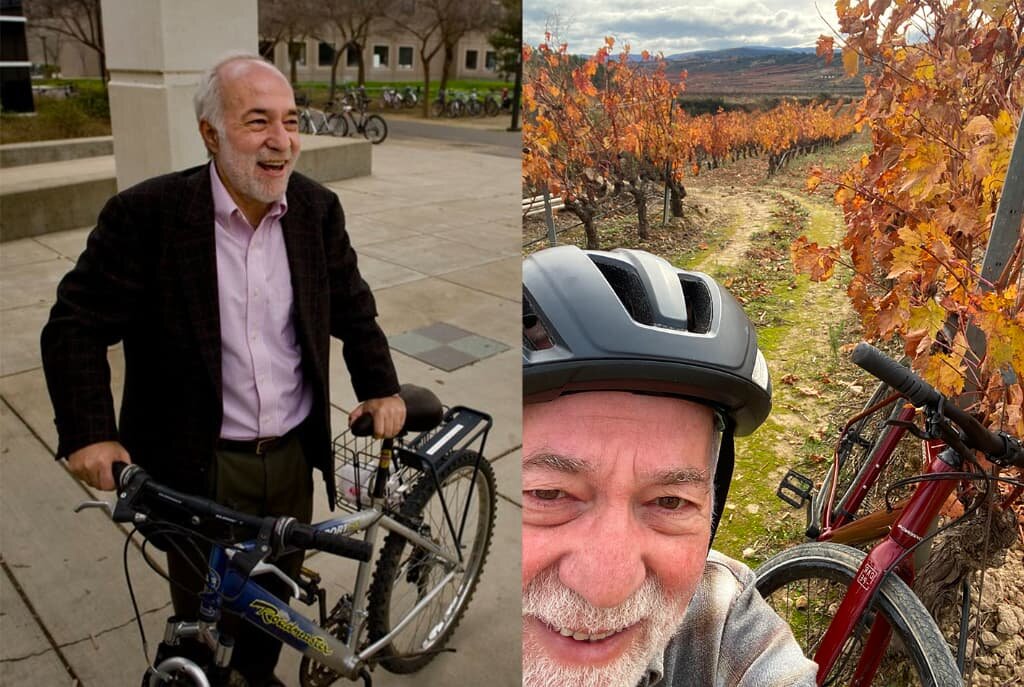
In his own life, he strives to practice what he preaches. "My favorite zero-emission vehicle is my bicycle," he says with a gentle smile. "Personal relationships and interactions are very important in changing policy," he notes. Ultimately, lasting change is not built on systems or technologies alone. It grows from the accumulation of small, trust-based actions between individuals that, over time, create a larger impact. Believing in the power of individuals and working across borders, Sperling has laid the foundation for sustainable transportation. His words offer a quiet yet firm encouragement to future generations.
Profile
Professor Daniel Sperling (USA)
Distinguished Blue Planet Prize Professor at the University of California, Davis
2013 Blue Planet Prize Laureate
A leading authority on transportation and environmental policy. His work extends beyond advances in vehicle technologies and fuels to encompass travel behavior and policy design. He has conducted research and provided policy recommendations to help realize low-carbon, sustainable transportation systems, taking a comprehensive approach that spans strategies for deploying electric vehicles and alternative fuels, the relationship between cities and transportation, and transportation demand management. His research has helped shape California's climate change policies and air pollution regulations, and the policy models pioneered there have influenced measures adopted in many countries worldwide. Internationally recognized for bridging academic research and practical policymaking, he received the Blue Planet Prize in 2013.